

Discover the Future of Microscopy: X-Ray, Electron, and Correlative Microscopy
Join us for an In-Depth Workshop on Cutting-Edge Microscopy Tools and TechniquesDate & Time
Tuesday, May 20, 2025
9:00 - 16:00h
Venue
KBC-huset, Umeå University
Seminar room “Stora Fokusrummet” (KBF301, Floor 3)
Linnaeus väg 6, 90736 Umeå
Agenda
|
09:00 - 09.10 |
Welcome and Introduction - Elke Hebisch, ZEISS |
|---|---|
|
09:10 - 09:35 |
Invited researcher presentation: |
|
09:35 - 10:00 |
Invited researcher presentation: |
|
10:00 - 10:15 |
Coffee Break |
|
10:15 - 11:00 |
New Developments and Applications of High Resolution X-ray Microscopy - Antonio Casares, ZEISS |
|
11:00 - 12:00 |
Current Advances in Volume Scanning Electron Microscopy - Jörg Lindenau, ZEISS |
|
12:00 - 13:00 |
Lunch |
|
13:00 - 14:00 |
X-Ray microscope online demonstration – Anke Dutschke, ZEISS |
|
14:00 - 15:00 |
Correlative microscopy: |
|
15:00 - 15:15 |
Coffee break |
|
15:15 - 15:45 |
Image Analysis and Post-processing - Dieter Lauer, ZEISS, online |
|
15:45 - 16:00 |
Q&A and wrap-up - Elke Hebisch, ZEISS |
Coffee and refreshments, as well as lunch will be served during the workshop to keep you refreshed and energized.
Please fill in the form to participate
Abstracts
Outer Epidermal Edges Mediate Cell-Cell Adhesion for Tissue Integrity in Plants (Özer Erguvan, SLU/UPSC)
Cell-cell adhesion in plants is thought to be mainly mediated by a thin layer called the middle lamella. In this talk, I will be showing how we challenged this long-standing view using computational simulations, ultrastructural analysis such as Atomic Force Microscopy and Electron Microscopy (SEM, TEM), and mechanical testing. Our results reveal that outer epidermal cell edges play a key role in maintaining cell-cell adhesion and tissue integrity rather than the middle lamella.
Visualizing Cellular Gateways: Membrane Contact Sites in Molecular Uptake (Sebastian Rönfeldt, UmU/IMB)
Cells rely on specialized contact sites between internal membranes to efficiently import nutrients like free fatty acids. In this talk, we present a visual journey into these cellular gateways using a correlative imaging workflow that bridges light and electron microscopy. By selectively opening (“unroofing”) cells and applying fluorescence and scanning electron microscopy techniques, we reveal the close proximity between caveolae—tiny invaginations in the cell’s surface—and the endoplasmic reticulum (ER). These contact zones may serve as direct import routes for fatty acids, helping cells respond quickly to metabolic demands.
New Developments and Applications of High Resolution X-ray Microscopy (Antonio Casares, ZEISS)
X-ray microscopy (XRM) provides non-destructive 3D imaging capabilities on specimens across a range of length scales, observing features with sizes spanning from nanometers to millimeters. Recent developments, inspired by results from dedicated synchrotron sources, have incorporated a number of X-ray optical elements that have driven resolution and contrast to levels previously unachievable by conventional X-ray computed tomography (CT) instrumentation. Now coupling these elements with high-energy polychromatic laboratory X-ray sources, ZEISS Xradia 810 Ultra, for example, can achieve 50 nm spatial resolution with the convenience of everyday laboratory access. This presentation will cover the unique X-ray detectors used in ZEISS XRM and the advantages of system architecture for enhanced-phase contrast and collection of interior tomography.
Current Advances in Volume Scanning Electron Microscopy (Jörg Lindenau, ZEISS)
Recent technical advances have positioned modern Scanning Electron Microscopes become the standard tools in biomedical EM imaging. Today’s SEMs provide better resolution, more sensitive detectors and faster image acquisition, which makes them applicable for a broad range of applications in life sciences and biomed routine applications. Through the implementation of automated serial images acquisition, SEM based imaging became the method of choice for 3D ultrastructure analysis of biological samples. Accordingly, we provide dedicated solutions for all major approaches in 3D SEM imaging, Array Tomography, Serial Block Face imaging, and Focused Ion Beam Milling.
Correlative Microscopy: FIB-SEM Sample Preparation & The BUILD Project (Jörg Lindenau & Antonio Casares, ZEISS)
As a manufacturer of Light-, Laser Scanning-, X-Ray-, Electron- and Ion-Microscopes, Zeiss offers a wide range of microscope systems which enable the user to capture a whole bunch of various image modalities for in depth sample analysis. It is obvious, that the correlation of these different image information is of major importance for up-to-date research. Easy to use correlative workflows allow to utilize images of various sources for sample navigation in SEM or to combine image modalities like Fluorescence and Back Scattered Electron contrast in 3D.
Big mUltimodal hIgh-resolution atLas Data Management (BUILD), is a proof-of-concept approach, we have started to develop brain preparation, scanning, and cross-correlation pipelines to utilize the virtues of complementary high-resolution neuroimaging techniques (MRI, 3D Polarized Light Imaging, X-ray tomography, 3D-SEM, mSEM, and FIB-SEM) serially applied to the same brain tissue. The main goal is to develop a scalable approach that facilitates the study of the human connectome from the millimeter to the nanometer domain in both the normal and the pathological brain.
BUILD Project:
Post-processing and Image Analysis (Dieter Lauer, ZEISS)
Segmentation is a critical yet often complex component of image analysis, serving as the bridge between raw pixel data and meaningful digital insights. Through effective segmentation, we can extract and quantify essential features such as volumes, surface areas, and distances from images. As datasets grow in size and complexity, traditional manual segmentation methods become increasingly impractical. To address this challenge, we propose a robust, AI-driven approach that automates the segmentation process, significantly enhancing efficiency and accuracy. Our solution is tailored specifically for microscope users and researchers who possess the expertise to identify relevant features but may lack the technical skills to implement sophisticated segmentation techniques. With the arivis brand, ZEISS empowers researchers to harness the capabilities of Deep Learning across various imaging modalities, including Light Microscopy (LM), Electron Microscopy (EM), and X-ray Microscopy (XRM). Our user-friendly platform not only simplifies the segmentation process but also accelerates research outcomes, enabling scientists to focus on their discoveries rather than the intricacies of image processing.


Özer Erguvan
Özer is a PhD candidate in Plant Cell Biology, specialising in microscopy, especially high-resolution microscopy, such as atomic force microscopy and Electron Microscopy. During my PhD, I developed correlative microscopy techniques to address how plant cells adhere to one another. These techniques have advanced my research and made me interested in understanding the relationship between cellular structure and biological phenomena.


Sebastian Rönfeldt
Sebastian is a staff scientist at the Biochemical Imaging Centre Umeå (BICU), specializing in super-resolution microscopy and correlative light and electron microscopy (CLEM). His PhD focused on virus-host interactions, followed by postdoctoral research in cellular imaging. His current work involves developing high-precision microscopy workflows for biological and infectious research.


Jörg Lindenau
Dr. Jörg Lindenau is a sales and applications specialist at ZEISS Research Microscopy Solutions in Germany. He holds a PhD in Neurosciences and has a strong background in Laser Scanning and Multiphoton Microscopy. He has been working for Zeiss for 25 years in different positions. During the last 10 years he specialized in volume imaging by Scanning Electron Microscopy and correlative Microscopy. In its current position he supports the Zeiss SEM and XRM business for life science-academia in Europe, Africa and Latin America.
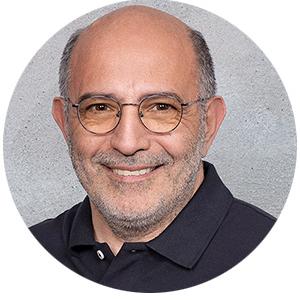

Antonio Casares
Dr. Antonio Casares is sales and applications specialist at ZEISS Research Microscopy Solutions in Germany. He has more than 25 years of experience in the design and construction of mass spectrometers and electron microscopes and a deep application knowledge in those techniques.


Dieter Lauer
In his role as business development manager for software at ZEISS, Dieter aims to enable microscope users to benefit from state-of-the-art solutions for image processing and analysis, including but not limited to machine learning tools, 3D image segmentation and automated, scalable analysis pipelines. Throughout his career he gathered extensive knowledge about end-to-end solutions in cellular biology and microscopy and today, he supports colleagues in Europe, Middle East, Africa and Latin America with a specific focus on software solutions tailored to the various customer needs for Light-, Electron and X-Ray Microscopy.


This workshop is moderated by Elke Hebisch
Elke is your regional sales representative for ZEISS Research Microscopy Solutions (RMS).
Please reach out in case of questions or requests for further information
Email: elke.hebisch@zeiss.com - mobile: +46 76 495 0290